
Recycling and Sustainability — Gardening Victoria
Gardening Victoria is committed to developing an eco-friendly waste disposal area and promoting a thriving sustainable rubbish gardening area across our community green spaces. Our approach balances practical waste diversion with low-carbon logistics, and we aim to demonstrate how local action can scale into meaningful environmental benefits. Every garden waste bag diverted from landfill becomes part of a circular cycle that enriches soils and reduces emissions.Our recycling percentage target
We have set an ambitious recycling percentage target of 70% diversion of garden and related waste streams from landfill by 2030. This target covers municipal green waste, compostable kitchen scraps collected at community gardens, and dry recyclables generated through plantings and events. To reach this goal we promote separate collection of organics, mixed recyclables, and responsibly handled residuals. The boroughs' approach to waste separation — with clear bin signage and weekly organics pickup — is a model we support and adapt for park and community garden settings.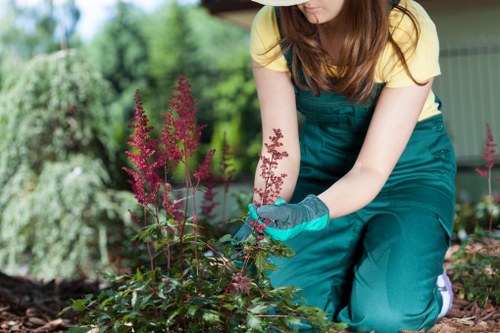
Practical steps for a sustainable waste garden
Our practical steps include creating well-signposted compost hubs, installing secure drop-off points for glass and metal containers, and coordinating e-waste and textile days with partners. We advocate for decentralized transfer points that keep material flows local, reducing transportation distances and emissions. Simple, repeatable procedures — like rinsing pots, segregating biodegradable matter, and flattening cardboard — increase recycling rates and cut contamination.Local transfer stations and collection hubs
We work with several trusted transfer stations and local green waste depots that accept community garden materials, woody pruning, and processed compost. These transfer stations act as pivotal nodes in the eco-friendly supply chain: they sort, grind, and prepare feedstock for mulching or composting. Where borough-run facilities have separate bays for organics, paper, glass and general waste, we align our garden bins to match those systems to ease community compliance and help borough crews process material efficiently.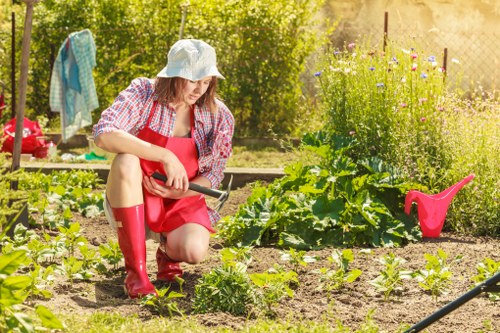
Partnerships with charities and social enterprises
Partnerships are central to our model. We collaborate with charities that provide labour for community cleanup days, social enterprises that convert green waste into soil products, and donation networks that repurpose usable items like pots, tools, and seed packets. These alliances ensure that surplus materials are reused or redistributed rather than discarded. Examples include:- Collections for community tool libraries and reuse centres
- Donation drives to charities accepting clean plant pots and gardening equipment
- Work programs where trainees learn compost management and recycling separation
Low-carbon vans and sustainable logistics
To keep our carbon footprint minimal we use a fleet of low-carbon vans for transfers and collections. These vehicles are either electric or hybrid, and routing is optimized to minimise mileage. Reducing vehicle emissions is essential for a genuine sustainable rubbish gardening area: smaller, cleaner vans collecting centralised loads at scheduled times beat ad-hoc heavy diesel pickups in both cost and carbon terms. Where possible, we coordinate with borough waste services to join consolidated runs and leverage their electric vehicle pilots.Community actions and separation schemes
Community gardens can mirror boroughs' separation schemes by offering clearly labelled bins for organics, soft plastics (collected separately), glass, and general waste. Education is key: signage, short demonstrations, and volunteer bin monitors reduce contamination and increase recycling yields. Small changes—like replacing mixed rubbish bins with a tri-sort station for compost, recyclables and residuals—result in measurable uplifts in recycling percentages and create cleaner, healthier planting beds.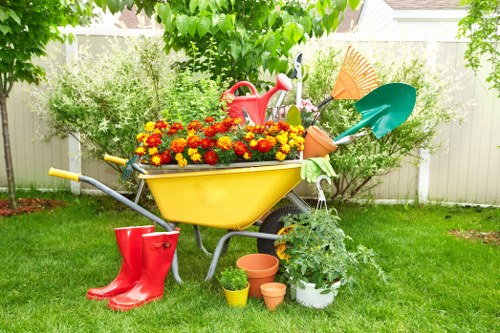
We also encourage seasonal initiatives such as leaf-mulching drives and woody-pruning days that feed the compost loop. These events not only divert materials from landfill but also generate locally produced mulches and soil conditioners that reduce the need for imported products. In some boroughs, councils partner with community groups to accept clean woody waste directly at transfer stations, reflecting how local systems can be adapted to support greener garden practices.
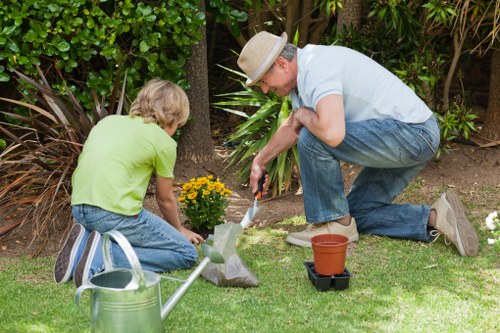
Measuring success and continuous improvement To track progress against our recycling percentage target we monitor volumes collected at transfer stations, weights of donor materials diverted through charity partnerships, and the frequency of collection runs completed by low-carbon vans. Data-driven reviews allow us to tweak bin placement, education programmes, and partnership agreements. We publish periodic summaries of diversion rates and case studies on how neighbourhoods transition from conventional disposal to a thriving sustainable rubbish gardening area. Our commitment to an eco-friendly waste disposal area goes beyond targets: it’s about building resilient, local systems that reuse resources, empower communities, and cut greenhouse gas emissions. By aligning with borough separation methods, collaborating with charities and social enterprises, and deploying low-carbon collection vehicles, Gardening Victoria models a practical, scalable route to greener urban gardening and lasting environmental benefit.